
Knowledge Base
Capacio summary
A paradigm shift in understanding and developing individuals and teams
Capacio is founded by leading brain scientists and behavioral scientists. Based on >100 years of neuroscience and 50 years of development and application of brain-based testing and profiling, we help to greatly elevate understanding of individual strengths and weaknesses in executive ability, performance and well-being. A paradigm shift in assessing, understanding and developing individuals and teams. Users include leading sports teams, corporations, health organizations, education companies, and players in advanced analytics and AI.
Offer: Psychological Testing and Profiling 2.0
An advanced testing platform that puts cognition and executive functioning at the center with the highest precision and validity. And the ability to combine with traditional and enriching psychological tests such as personality and aptitude. The focus is on understanding and developing individuals, teams and organizations with sharper decision-making skills.
Cognition and executive functioning: The mental processes used to regulate our behavior, the control tower.
Executive functioning: It is about our “ability to perform in changing contexts” and how we use our core cognitive (executive) abilities”. For example, when we plan, prioritize, manage time, regulate emotions, solve problems, make decisions, adapt and achieve goals. Each individual works differently well in different contexts. This is largely linked to our cognitive abilities and is the insight sought in measurement and interpretation in order to optimize and compensate our functioning, behaviour and well-being.
Why is it important
Behavior is created in the brain. The part of the brain that regulates behavior and that we can regulate can be measured very precisely and with high reliability. This allows us to understand dynamic behavior in a completely different way than before and to see both internal and external abilities and behaviors. See “The importance of executive abilities”.
Builds on complex knowledge but is easy to use and understand
The tools are powerful and unique but easy to use.
- Built as a self-service platform.
- Onboarding includes: training and support to get started
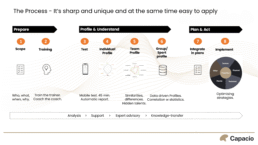
- Test links are created in minutes. Large-scale testing possible
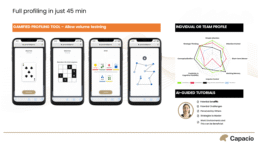
- Cognitive testing is done on mobile phones and takes 45 minutes in the basic version.
- Testing can be divided into 10-minute stages.
- Test configurations can be customised.
- Based on sharp profiling of individuals
- Team profiles are built from anchored individual profiles.
- Analysis and reporting are automated.
- Reports are available electronically and can be downloaded.
- Rich digital resources with an AI assistant are built into the reports to support user analysis and also sharing of the results.
- Support is included and expert advice is available.
- For professional users, certification is offered which takes about 20 hours per person. This is based on practical use of the tools.
Built to support the entire talent process, from selection, matching and onboarding to the development and support of leaders, individuals, teams and organisations.
Tests included
- Cognitive Profiling: This is the most unique, evidence-based and accurate part of the solution. It is based on the measurement of cognitive capacity and executive ability. Captures cognitive strengths and weaknesses in the form of measures of capacity, use of different abilities in normal and stressful situations, and self-awareness. The measures are presented in an electronic report that includes descriptions, contextualisation, and tips and advice. See annex for a description of the executive abilities
- Expanded personality inventory: In addition to five-factor analysis, empathy, social style, attention to detail and impulsivity are also captured. A science-based and more complete questionnaire that captures more subjectively described traits. The self-assessed traits can be better assessed and evaluated based on the objective cognitive ability measures. See “Extended personality questionnaire”.
- Aptitude: A traditional matrix test based on Raven matrices (under finalisation).
Application
The tools and platform support use throughout the talent process, i.e. testing, interpreting, and applying the results, i.e. putting them into practice.
- Testing: Individual cognitive profiles and personality assessments. Team profiles. Whole organizations.
- Interpretation: Self or with our assistance depending on training and certification. The interpretation is done in the traditional way through interview, and/or validation of test results together with the individual and team. The crucial difference is the more complete and accurate data that minimizes bias and subjectivity. Interpretation is based on insights into both visible, subjective and invisible objective parameters.
- Application: Adapt goals, activity plans, leadership, collaboration and other prerequisites based on a deeper understanding of the individual, team and organization. And thus a more relevant dialog and grounded relationship. Support individual and team development through more informed individual and situational leadership and coaching based on a sharper evidence base themselves as end customers or through certified partners.
Application in the talent process
The platform supports the entire talent process and it is up to each organization to decide on its application. The more you use the tool, the greater the impact and value:
- Attract and build relationships: Share reports with managers, employees, coworkers and applicants as an added value and gift and strengthen your or your clients’ employer branding.
- More informed decisions and stronger selection: Strengthen the selection process with more evidence-based, complete, in-depth and accurate data.
- Strengthened matching and onboarding: also test existing staff and match individuals and teams with new applicants. Optimize insights and conditions for success. Ensure the right person in the right place with the right conditions.
- Development, (self-)leadership and teamwork: Build strong teams and leaders through insights into also strengths and weaknesses related to cognition and executive functioning.
- Cognitive Coaching: Individualized support based on test results and actual conditions.
- People analytics: Correlate, HR data, performance data with cognitive data and gain deep insights into the organization’s inherent talent, potential in terms of e.g. stress resilience, decision making, problem solving, innovation and adaptability.
Price model
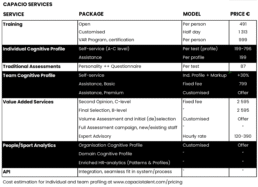
We offer different arrangements based on your needs.
- Pay per test (PPT): A standard entry-level model. Variable price per test makes it easy to get started. Price level linked to volume and category to be profiled. Initially always with assistance then without.
- Pay Per Hire (PPH): Price adapted to the number of recruitment campaigns with unlimited testing per campaign. Price adapted to the competitive situation.
- Project price: For example, for entry-level and collaborative projects of an all-inclusive nature. Content, scope and price are tailored to your needs.
- Subscription: License + variable cost/test. For ongoing use, for example after an initial phase (project or PPT).
Benefit
In short, brain-based testing adds higher validity and relevance and provides faster, more accurate and valuable individual-based insights, decisions and interventions. This in turn enables increased function, performance, well-being, productivity and efficiency in all parts of the talent process. For individuals, leaders, teams and entire organizations.
For more details see appendices “Feature, benefit, meaning”, “Use cases” and “Quantified value”.
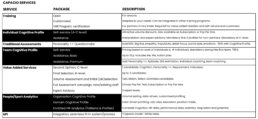
Services/Prices
Test/Report
FAQ
There are many different systems and approaches but often the talent process looks similar. Professional users trained and certified. At its core, Capacio is a service and the platform is built for practical use and support in interpretation to be used by the organization as self-service. It is available as a cloud service that can be used as a complement to existing systems. Via API, it can also be integrated into existing HCM and ATS systems and thus adapted to existing working methods and environment. For larger customers and partners, this is the most appropriate way to scale its use.
The tools are powerful and unique but easy to use. Since the purpose of the tool is to understand, predict, lead and develop behavior, performance and well-being, the most demanding step is of course interpretation, validation and contextualization of the results. Key facts:
- Self-service platform.
- Onboarding included: Training and support to get started. Instructional videos are built-in
- Test links are created in minutes.
- Cognitive testing takes place on mobile and takes 45 minutes in the basic version.
- Testing can be divided into 10-minute stages.
- Supports profiling of both individuals and teams.
- Analytics and reporting are automatic.
- Reports are available electronically and can be downloaded.
- Rich digital resources with an AI assistant are built into the reports to support the user’s analysis and also sharing of the results.
- Support is included and expert advice is available.
- For professional users, certification is offered that takes about 20 hours/person. This is based on the practical use of the tools.
- Link/QR code is emailed or distributed in any way in any channel. If integrated via API, this can be automated
- The test consists of “small games” that measure the capacity of executive abilities.
- The test is self-instructive and includes instructions as well as exercises for each test item.
- The user decides who will receive the test result and how
- Employees can use the insights and reports in onboarding and through self-study and self-help or through the support of certified coaches (internal or external).
- A self-service platform that is easy to learn and use
- The test is available in Swedish, English, Spanish, Norwegian, Danish and new languages can be added quickly and easily.
- The report is available in English, soon in Swedish. More languages can easily be added.
- The reports are available in a full version, executive summary and partial reports. They can be tailored to your needs and target audience
- Ongoing support, training and expert advice are included as agreed. Our experts include neuroscientists, sleep researchers, leading neuropsychologists.
- Our network of certified facilitators and coaches, ranging from psychologists to coaches, leadership developers and organizational consultants.
- We offer a certification program aimed at self-service. About 20 h/person to actively test and interpret.
- The platform can through API in existing HCM / ATS systems, external or internal. And thus adapted to existing working methods and processes.
- Pricing models and pricing with flexibility to fit all scenarios.
The tools are based on 130 years of neuroscience, 80 years of cognitive neuroscience and 50 years of practical application in neuropsychology and neuropsychiatry. They have then been extracted and adapted to the normal population and different contexts. The tools have a very, very high validity in measuring what they intend.
This high precision is perceived by the testers and others who see the results with an idea of the person in question. These sharp testimonies are the main reason to make a first sharp pilot and experience the power yourself.
As the measurement is made of very fast and varying abilities, the results should always be validated with the individual to ensure that they reflect reality. High scores cannot be faked or trained for. They measure real ability. Low scores may be the result of the day or chance. The report includes a section on the state of the individual at the time of the test. The individual has Comparison and more detailed description is given in separate annex “Comparison psychological tests”.
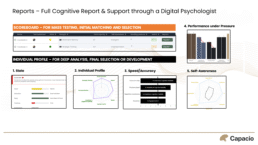
- Executive summary that briefly summarizes all results
- The state of testing: Motivation, sleep, fatigue, disturbances
- Relative strengths/challenges without scale points
- Cognitive profile with scale score and compared to norm, requirement specification or other profiles
- quality measures such as speed vs accuracy in creativity, flexibility and impulse control (shifting, creating, throttle and braking)
- Performance under pressure. How do the abilities work in simple and pressured conditions
- self-assessment, how insightful is the individual
In addition to graphs and verbal descriptions, a video/text describing the specific profile is automatically generated. There is a more concise and a more comprehensive description that includes:
- How the measured ability is perceived by the outside world when it is stronger or weaker
- Pros/Cons
- How it manifests itself in different contexts
- Recommendations on how the individual or the outside world can help optimize strengths and compensate weaknesses
See description of the report above. The interested consumer of the report can access detailed information. As with all developments, insight grows with continuous work and evaluation.
As the knowledge of our dynamic functioning in changing contexts is complex, it is most powerful if a knowledgeable person, psychologist or certified user goes through validates, anchors and creates acceptance for results and its meaning relative to job, challenge or context.
Then the work can begin. This can be on your own, in a team or under the guidance of a “cognitive coach”. Capacio also trains coaches in the application of the results.
The value of such sharp behavioral tools with up to 30% higher accuracy can be enormous and cover many areas such as self-awareness, functioning, performance, mood, leadership, collaboration, productivity and efficiency. We refer to the annexes “Use cases” and “Quantified value of significantly sharper psychological testing”.
The key words to achieve the desired effect – regardless of the precision of the data and insight – are acceptance, commitment, engagement, motivation and continuous work.
Our Executive Abilities
Introduction
Executive functions is a term that describes all the abilities that control and regulate the brain, our behavior and our ability to perform. They manage and regulate all the information that our brains receive and process. The capacity of each individual capability is measured to better understand and explain our performance in different contexts. The abilities interact in a finely tuned interplay and together make up our individual cognitive profile. In addition, the abilities vary individually, depending on our condition, situations, tasks. By gaining insight into our own and others’ cognitive profiles, we can gain a deeper understanding of strengths and weaknesses and thereby an objective, evidence-based basis for making more informed decisions about everything related to our lives, jobs, interests, our functioning, our performance, relationships and well-being.
Brief description of the abilities
- Basic attention – Being able to concentrate and focus on a task.
- Controlled attention – The ability to consciously direct and focus one’s attention on a new stimulus or task, especially when something unexpected happens or when distractions are present.
- Short-term memory – To perceive and record what happened here and now
- Working memory – Keeping new and old information up to date, “online” and working with it when analyzing, making decisions and solving problems.
- Impulse control – To regulate one’s impulses and whims. “Gas and brake”. Strong connection to “timing” on the pitch.
- Cognitive flexibility – The ability to switch between different ways of thinking, perspectives, or tasks. To be able to quickly adapt to new rules, tasks or environments without getting stuck in previous thought patterns.
- Creativity – Finding new, unique solutions to different problems and challenges that arise.
- Conceptualization – The ability to identify, organize, and understand overarching concepts or rules that connect different objects, ideas, or tasks. This requires the individual to be able to see connections and abstract similarities, which is crucial for complex problem solving, planning, and adapting to new situations.
- Strategic thinking – The ability to find the most effective path to a given goal.
Basic concepts and key terminology
Executive abilities, the human control tower
Executive abilities are cognitive processes that govern planning, decision-making, problem-solving and self-regulation. They act as the brain’s control tower, enabling effective management of complex tasks and adaptation to changing circumstances.
Cognitive capacity and executive capacity
Cognitive capacity refers to an individual’s ability to process information, while executive capacity relates to how well one can apply this capacity in practical situations. Together, they affect how effectively a person can manage and complete tasks.
Individual cognitive profile
An individual cognitive profile is a detailed map of a person’s cognitive strengths and weaknesses. It helps to understand unique patterns of thinking and problem solving, which can be used to optimize performance and development.
Cognitive ‘Base-line’
A cognitive baseline represents an individual’s normal cognitive functioning at rest or under standard conditions. It serves as a reference point for identifying changes or deviations in cognitive performance over time.
Individual cognitive variability
Individual cognitive variability describes the natural fluctuations in a person’s cognitive performance depending on factors such as stress, fatigue or motivation. Understanding this variability can help predict and manage periods of impairment.
Cognitive dynamics and the link between State, Capacity and self-awareness
Cognitive dynamics is about how states (such as fatigue or stress), capacities (cognitive resources) and self-awareness (understanding of one’s own abilities) interact. This connection is crucial to effectively adapt and optimize performance.
Optimizing and Compensating strategies based on cognitive profile
Based on an individual’s cognitive profile, strategies can be developed to optimize strengths and compensate for weaknesses. These strategies can improve efficiency and reduce cognitive load in different tasks and situations.
Validation and acceptance of test results
Validating cognitive test results means ensuring their accuracy and reliability. Acceptance of the results requires that they are understood and accepted by individuals and organizations in order to be used effectively in decision-making and development actions. Any cognitive profile to be used as a basis for development should be validated and accepted to form a basis for development.
Difference between executive abilities, personality and intelligence (logical thinking)
Executive abilities are objectively measured by ability tests that test dynamic cognitive capacity in changing environments, brain information processing, self-regulation and decision-making. Personality refers to questionnaires for subjectively rated behavioral patterns. Intelligence (especially logical thinking) measures the ability to analyze and solve problems rationally in given, more static environments that do not change.
Difference between intelligence and logical thinking (measured for example by Raven’s Matrices)
Intelligence encompasses a broad set of cognitive abilities, including memory and problem solving, while reasoning, as measured by tools such as Raven’s Matrices, focuses specifically on the ability to identify patterns and draw logical conclusions. Outside research and clinical settings, logic tests are commonly used as samples to measure ‘fluid intelligence’, which is part of the general intelligence factor and aims to measure the ability to make sense of confusion and to solve novel problems.
What are the executive abilities and what do they mean in leadership
Executive abilities are an umbrella term that encompasses the central abilities that are used to optimize our execution in different contexts, situations and tasks. To control and regulate our behavior, functioning, performance and well-being. We can call it the control tower of man. The task of the capabilities is to manage the information we take in and to optimize decisions, adaptations and efforts. Capacio tests measure eight main abilities.
Basic attention
Being able to concentrate and focus on a task.
- Example in leadership: Being present and giving full attention during an important meeting or during a conversation with an employee.
- Why it’s important: Basic attention helps the leader understand important details, build trust, and make informed decisions without missing nuances or signals.
Controlled Attention
The ability to consciously direct and focus one’s attention on a new stimulus or task, especially when something unexpected occurs or when distractions are present.
- Example in leadership: Shifting focus from a planned agenda to dealing with a sudden crisis situation in the workplace.
- Why it’s important: A leader needs to be able to quickly reprioritize and manage change without losing control of the big picture.
Short-term memory
To perceive and register what is happening here and now.
- Example in leadership: Remembering details from a recent presentation or an employee’s input during a meeting.
- Why it’s important: Short-term memory allows the leader to absorb information and use it directly to make decisions or contribute to discussions.
Working memory
A central ability to keep new and old information current, “online” and work with it when analyzing, making decisions and solving problems.
- Example in leadership: Keeping multiple perspectives in your head at the same time, such as weighing your team’s feedback against the company’s strategic goals.
- Why it’s important: Working memory is essential for solving complex problems and for navigating situations with many variables. It has a clear connection to leadership, learning, intelligence, etc.
Impulse control
To regulate one’s impulses, whims, thoughts and feelings. The ability to “Accelerate and brake” linked to a specific situation. It is thus about the regulation of both information and emotions.
- Example in leadership: Staying calm in a stressful situation or waiting to give criticism until the right opportunity arises instead of reacting spontaneously in frustration.
- Why it’s important: Good impulse control strengthens the leader’s credibility and creates a safer working environment where well-thought-out decisions can be made.
Cognitive flexibility
The ability to switch between different, more or less complex ways of thinking, perspectives, or tasks.
- Example in leadership: Adapting to a new strategy from management or quickly switching to a new plan when a previous strategy doesn’t work.
- Why it’s important: An agile leader can handle uncertainty, adapt to change, and help their team navigate a changing environment.
- Stress-related: Research shows that cognitive flexibility correlates with the number of sick leave days in companies. This means that the measure can be used as an indicator of stress and sick leave, as a basis for preventing stress and sick leave, and as an individual-based better able to handle changes in the business.
Creativity
Finding new, unique solutions to different problems and challenges that arise. In this case, “convergent” refers to creativity, i.e. to create within given frameworks, as opposed to “divergent” creativity, which refers to completely free creation. This is because reality often consists of frameworks and limitations that must be followed.
- Example in leadership: Proposing an innovative solution to increase the efficiency of a project or resolve a conflict in the workplace.
- Why it matters: Creativity allows the leader to look beyond traditional solutions and create opportunities that benefit both the individual, the team and the organization.
- Creativity and Cognitive Flexibility: Are closely linked and are linked to, for example, the ability to adapt to rapid changes in the environment.
Conceptualization
The ability to identify, organize, and understand overarching concepts or rules that connect different ideas or tasks. And to be able to sort out and ignore things that are unimportant in the context in complex amounts of information.
- Example in leadership: Understand the company’s long-term vision and how individuals and the work of the different teams contribute to the larger strategy.
- Why it’s important: A leader who can conceptualize, see connections and wholes, which helps to prioritize correctly and communicate effectively.
Strategic thinking
The ability to find the most effective path to a given goal.
- Example in leadership: Developing a long-term plan to increase the company’s market share or efficiently allocate resources in a project for the best possible outcome. To communicate a vision in a vivid, vivid and understandable way that engages employees. And to contribute to the creation of a concrete plan that leads to goal fulfillment
- Why it’s important: Strategic thinking helps the leader make decisions that not only solve pressing problems but also create long-term sustainable success for the organization.
Together, the executive abilities form a cognitive profile. Every person has a unique one. Underlying evidence, long research and application in this context provide unusually high precision in measurements and thus a both missing and objective basis that says a lot about individuals’, teams’ and organizations’
thinking styles, cognitive capacity and ability to execute. And how this varies in varying contexts.
Benefits
| Property | Advantage | Meaning |
| Brain first | All behavior starts in the brain. New knowledge. New insights. | Better understanding of more aspects of behavior – Visible and invisible. Deeper insights into individual talent and potential |
| In-depth understanding of cognition | Sharper decision-making data regardless of the purpose of the testing. | A more informed understanding of key processes such as problem-solving, decision-making, adaptability and stress tolerance. |
| Executive ability | Greatly increased understanding of human dynamics and function. | The ability to function successfully in changing environments and roles, with a focus on strengths and weaknesses. And how this varies more context. |
| Enormous evidence | 30% more precision than traditional tools. | Stronger quality and time savings in decisions, efforts and commitments. Global hit-rate in recruitment is about 50%. Increase this to 80%. |
| Supplementary tests provide a stronger overall picture | Combine executive and traditional tests for a more complete overall picture. | Objective brain-based tests increase the precision in the interpretation of subjectively rated traits such as personality traits. |
| Expanded personality inventory | Complement and broaden the concept of personality with an understanding of empathy, attention to detail, social style and impulsiveness. | A more nuanced, comprehensive and professional picture of the individual’s self-description and behavioral patterns |
| A universally strengthened talent and human resources management | We provide you with the keys to increased self-awareness in leaders and employees as well as deeper understanding, acceptance and respect for the capabilities and behavior of others. | Self-awareness is, according to research, one of the most important keys to enhanced leadership, functioning, performance, well-being, increased efficiency and productivity. |
Quantified value of sharper psychological testing
By combining cognitive tests with traditional psychological tests, accuracy can be increased by 30%. Examples of the meaning of higher accuracy in psychological testing:
Application cases
- Lower staff turnover
- Increased accuracy in recruitment – Reduced recruitment errors
- Reduced sick leave
- Strengthened leadership
1. Lower staff turnover
- Employee turnover: Approximately 10% of the total workforce.
- Total number of employees: Assume 16,000.
- Employees leaving annually: 1,600.
- Annual salary: Assume 500 000 SEK per person (including social security costs).
- Cost of employee turnover: 75% of annual salary per person.
- Total cost of employee turnover: SEK 600 million per year.
- Improvement in employee turnover: 3%.
- Savings from the improvement: SEK 18 million per year.
Reducing employee turnover by just 3% means significant savings of SEK 18 million, which clearly shows the financial impact of working strategically with the sharpest tools to understand, motivate, lead and thus retain employees.
2. Increased accuracy in recruitment – Reduced recruitment errors
- Cost per wrong recruitment: Assume 700 000 SEK.
- Wrong recruitment rate: 50% of all recruitments and promotions (repeated global surveys).
- Total number of recruitments and promotions per year: Assume 2,000.
- Total cost of wrong recruitments:
- 50% of 2,000 = 1,000 wrong recruitments.
- 1,000 x 700,000 SEK = 700 million SEK annually.
- Reduction in wrong recruitments: 15%. (30% improvement x 50% error rate).
- Savings from improvement:
- 15% reduction in 1,000 wrong recruitments = 150 fewer wrong recruitments.
- 150 x 700,000 SEK = 105 million SEK in annual savings.
Reducing the proportion of wrong recruitments by 15% means an annual saving of SEK 105 million. This clearly demonstrates the economic importance of improving recruitment and promotion processes through more complete, precise, relevant and validated tests that provide better decision-making and optimized selection methods.
3. Reduced sick leave
Calculation and summary for sick leave costs and savings
- Average sick leave rate: 5% of the total workforce.
- Total number of employees: 16,000.
- Number of people on sick leave per year: 5% of 16,000 = 800 people.
- Average number of sick days per person on sick leave per year: 10 days.
- Cost per employee per year: 22 000 SEK (includes salary costs, loss of production, etc.).
- Total cost of sick leave per year: 800 people on sick leave x SEK 22,000 = SEK 17.6 million per year.
- Reduced proportion of people on sick leave: 240 people (30% reduction in people on sick leave).
- Cost savings: 240 fewer people on sick leave x SEK 22,000 = SEK 5.3 million in annual savings.
Reducing the number of people on sick leave by 240 people, corresponding to 30%, leads to an annual saving of SEK 5.3 million. Through initiatives such as improved work environment, preventive measures and increased employee health, these costs can be significantly reduced, while improving employee well-being.
4. Strengthened leadership
- Number of employees: 16,000.
- Total productivity value: SEK 30 billion per year.
- Average productivity per employee per year: 1 875 000 SEK.
- Impact of leadership on productivity: 20%, corresponding to SEK 6 billion per year.
- Improvement through leadership development and increased self-awareness in leaders: 30%.
- Annual savings from improvement: SEK 1.8 billion.
Improving leadership by 30% can provide an annual saving of SEK 1.8 billion, while strengthening employee engagement, productivity and the working climate. Investments in leadership development therefore have a very great financial and strategic importance.
Research on the impact of leadership
Research shows that leadership has a significant impact on the company’s performance, including sales, efficiency, and productivity. Some of the findings:
- Impact on sales: A study published in Harvard Business Review found that companies with strong leaders perform up to 20% better in sales compared to companies with weak leadership.
- Efficiency and productivity: According to Gallup, leadership influences up to 70% of the variation in employee engagement, which is a critical factor in productivity. Engaged teams are on average 21% more productive.
- Employee loyalty and well-being: Studies show that 50% of employees who leave a company do so because of their manager, making leadership central to employee turnover and work climate.
What does it mean to be able to predict and develop good leadership with 30%?
If you can improve and predict leadership qualities by 30%, it means that the company can make big gains in efficiency and results. For instance:
- Prediction: Using cognitive and psychological tests can identify potential leaders who have the right traits, such as decision-making skills, empathy, and flexibility.
- Development: Through targeted training and coaching, companies can reinforce weak areas in leaders and maximize their strengths.
Self-awareness – A key factor for successful leadership
Research shows that self-awareness is one of the most critical qualities for successful leaders. Self-awareness is about understanding one’s own strengths, weaknesses, values and how one’s behaviors affect others. It is the foundation for personal development and effective leadership.
- Self-awareness correlates with leadership effectiveness:
- A study published in the Harvard Business Review found that leaders with high self-awareness are more effective and create better results. Teams led by self-aware managers showed 25% higher productivity and 31% higher employee engagement.
- Leaders often underestimate the need for self-awareness:
- Research by Eurich et al. shows that only 10-15% of people have truly high self-awareness, despite up to 95% believing they are self-aware. For leaders, this can lead them to unknowingly undermine their team’s performance.
- Self-awareness improves decision-making:
- Studies from Cornell University show that self-aware leaders find it easier to handle complex situations and make better decisions, especially under pressure.
- The impact of self-awareness at the organizational level:
- A report by Forbes highlights that organizations with self-aware leaders are 16% more profitable than those without. Self-awareness in leaders promotes a more inclusive and innovative culture.
How self-awareness contributes to better leadership
- Effective feedback: Self-awareness makes it easier for leaders to give and receive constructive feedback.
- Improved relationships: Self-aware leaders build stronger relationships with their teams by demonstrating empathy and adapting their leadership to individual needs.
- Resilience: Self-awareness helps leaders manage stress and recover faster from setbacks.
Extended Personality Form - Personality ++
The Enhanced Personality Questionnaire, PT++, is a scientifically validated assessment tool designed to provide a comprehensive understanding of an individual’s personality traits and behaviors. By integrating several established questionnaires, PT++ offers a holistic profile that is particularly beneficial in professional environments for personal development, team dynamics, and leadership development.
Components
- Short Version of the Big Five Personality Inventory
- Purpose: Evaluates the five main dimensions of personality: Extraversion, Kindness, Conscientiousness, Emotional Stability, and Openness.
- Reason for brevity: A condensed version of the longer inventory, designed for efficient assessment without compromising reliability. Its brevity allows for integration with other important forms, providing an overall picture of the individual’s characteristics.
- Empathy – Interpersonal Reactivity
- Aim: Evaluates empathy through three sub-scales: Perspective-taking, (Imagination), Empathetic Concern and Personal Discomfort.
- The importance of empathy: Understanding and sharing the feelings of others is essential for effective communication and collaboration in the workplace. High empathy is linked to improved relationships and team cohesion.
- Attention to detail and social skills
- Aim: Assess characteristics related to social skills, attention shift, attention focus, communication and imagination.
- Relevance of social style: Identifying social interaction patterns helps improve teamwork, leadership effectiveness, and conflict management. Awareness of social style allows for more harmonious and productive collaborations.
- Impulsivity and Emotional Regulation
- Purpose: Map characteristics linked to attention and offer insights into focus, organization and time management.
- Importance of impulsivity and emotional regulation: Assessing impulsivity helps develop strategies for self-control and conscious action, which are essential for success. Effective emotional regulation is linked to mental health and stress management, which contributes to resilience and well-being.
- General attention, emotional regulation, and social cognition:
- Purpose: Captures self-reported information about attention, emotional regulation, and social cognition.
- Function: A form that captures the individual’s completely own and direct description of the characteristics. Not based on a norm. Serves as a complement and “control” of the other forms, which are based on normative estimates.
- Social cognition: Refers to the mental processes involved in perceiving, interpreting, and responding to social information. This includes how individuals think about themselves and others, store and process social cues, and understand behaviors and intentions.
Application areas
The inventory can be used on its own, but we strongly recommend that you always use it as a complement to the objective cognitive profile.
- Selection: A more complete basis for decision-making, early or in the final stage of the selection process.
- Personal development: Gain self-awareness to identify strengths and areas for improvement.
- Team building: Improve group dynamics by understanding different personality profiles.
- Leadership training: Develop leadership skills tailored to individual characteristics.
Administration
Personality++ is conducted online, ensuring accessibility and convenience. It takes only 15-20 minutes to complete. Upon completion, participants receive a comprehensive report detailing their personality profile.
About Capacio
Capacio specializes in advanced psychometric assessments. Our tools are based on rigorous research and are designed to empower individuals and organizations to achieve their full potential. For more information, visit capacio.com.
Comparison of psychological tests: Personality inventories, Aptitude tests and tests of Executive abilities
Psychological tests have different purposes, methods, and uses. It compares tests of executive abilities with the two most common types of tests: personality inventory and aptitude or logic tests.
1. Personality inventory
Definition and purpose:
Personality inventories are question-based tools that measure an individual’s characteristics, preferences, and tendencies within different personality dimensions. You can also call it the individual’s character trait. There are about 2,500 different measuring tools in this category, of which about 200 can be found in Sweden. Many lack evidence. The most established model is called the “Big Five”. There are many providers that have offered five-factor tests.
What is measured:
- Behavioral patterns, preferences, and characteristics of individuals in a larger group.
- The respondent’s answers are grouped into 5 overarching dimensions: Openness, Conscientiousness, Extraversion, Accommodating and Neuroticism. There are also a number of sub-dimensions.
What is not measured:
- The individual’s actual ability to deal with specific situations or changes.
- Objective capabilities such as problem-solving, decision-making, or adaptation.
How it is measured:
- Questionnaires in which the individual self-reports on their behaviors and preferences.
- The results are subjective because they are based on the individual’s own perception and interpretation.
Important to note:
- Personality inventories are statistical tools for the purpose of explaining visible, consistent behaviors over time
- The tools are intended to explain behavior in individuals but at the group/population level.
- Using these to draw conclusions about specific individuals’ behaviors in specific situations or contexts is not the original intention of the tools and can be risky, as the results are sensitive to self-image and interpretations.
2. Aptitude/Logic Tests
Definition and Purpose:
These tests are designed to measure an individual’s ability to solve problems and think logically, typically through tasks involving matrices or sequences. They are part of broader intelligence tests whose original purpose is to measure learning ability.
What is measured:
- Logical and analytical problem solving in a static and structured environment.
- Selected sub-capacities in intelligence, such as pattern recognition and logical thinking.
What is not measured:
- Dynamic adaptation to changing situations, emotional reactions, or creative problem-solving in real-world environments.
- The capacity to handle time pressure, conflicts or complex situations.
- Behavioral variations and functioning under pressure.
How it is measured:
- Standardized tests with fixed tasks, often with a single correct solution.
- The results are objective and comparable, but they capture a limited part of the individual’s intellectual capacity.
Important to note:
- These tests are static and measure a specific type of problem-solving in a controlled environment.
- The tests have been shown in research to have a strong predictor of success in studies, career, good leadership, etc. Again at the group level. Drawing these conclusions at the individual level can be difficult.
- They provide limited insight into how an individual performs in the dynamic and complex situations of reality.
3. Tests of executive abilities
Definition and Purpose:
Tests of executive abilities are designed to measure an individual’s specific capacity to handle dynamic and changing situations. They are based on the brain’s processing of information, thoughts and emotions and measure the capacity of central executive functions or abilities. This capacity explains much of the individual’s executive capacity, or more simply put, executive capacity. This ability varies with condition, task and situation, which is why both testing and interpretation take these variables into account to capture dynamics and variation in the individual. The purpose of the tests is to understand and best support and optimize the individual’s ability to act successfully in real-world environments.
What is measured:
The capacity of executive abilities such as:
- Attention
- Memory
- Impulse control
- Cognitive flexibility
- Conceptualization skills
- Strategic thinking
Together, they form a cognitive profile that is crucial for the ability to handle time pressure, complexity and conflicts in dynamic environments.
What is not measured:
- Subjective preferences or self-perception. (With the exception of built-in estimates of intrinsic abilities in connection with these being tested).
- General characteristics such as personality traits.
- IQ
How it is measured:
- Standardized, but dynamic tests where the individual performs tasks that reflect real-life challenges.
- The results are objective and provide insight into how the individual functions under different types of pressure and change. The capacity of the abilities measured is innate, which is why the application is very much about understanding, optimising and compensating based on individual conditions.
Important to note:
- These tests are the only ones that are developed for and actually measure the individual’s capacity on an individual level.
- They are designed to reflect reality and capture how individuals function in changing environments. The tests take random samples of lots of problem solving where time pressure, conflicts and complexity constantly vary, in order to reflect reality.
Summary: Different tests for different needs
| Type of test | Purpose | What is measured | Use |
| Personality Inventory | Measures personality traits at the group level. | Behavioral patterns and preferences. | Understand individuals’ tendencies and preferences at the group level. |
| Aptitude/logic tests | Measures logical problem solving in static environments. | Sub-capabilities in intelligence. See patterns in figures, o/e numbers, o/e words. | Understand general problem-solving skills. |
| Executive tests | Measures dynamic capacity and capability at an individual level. | Adaptation, flexibility, problem solving, decision-making, focus, etc. | Understand and develop the functioning of specific individuals in dynamic environments. |
Together, these tests provide an overall picture:
- Executive tests complement personality and aptitude tests by adding objectivity and dynamism.
- Together, they provide a more complete picture of an individual.
- The combination of these tests also makes it possible to better understand and assess the results of the two group-level tools, leading to more informed and accurate conclusions about individuals’ capacities and behavior.
- Example 1: An individual who, for example, shows high neuroticism in the big five, has a tendency to worry. If this is combined with, for example, low impulse control and strong strategic and analytical thinking, there is a risk that these feelings cannot be stopped, but dominate the individual, who also tends to overanalyze them with the risk of negative loops.
- Example 2: A person with lower cognitive flexibility and creativity has greater challenges switching between different more or less complex themes, issues and tasks. In severe change, in certain environments or under certain leadership, this can give rise to stress, which in turn can lead to sick leave, reduced motivation, etc.
- Example 3: Everyone is at different ends of rating scales and objective profiles. Some have a high IQ but low executive functioning or vice versa. They can work great at work and life regardless. Combined tests provide deeper understanding and thus greater opportunities for optimization.
Precision and validity
Meta-studies
To understand the precision of psychological tests in the business world, several extensive meta-studies have been conducted. These do not include tests of executive abilities as these are used so far in research and psychiatry.
The latest meta-study is done by Sackett, Zhang, Berry and Lievens (2021) and is titled: “Revisiting Meta-Analytic Estimates of Validity in Personnel Selection: Addressing Systematic Overcorrection for Restriction of Range”. In this article, the authors review previous meta-analyses on the validity of different selection methods in personnel recruitment and discuss how over-correction for limited selection may have led to overestimated validity estimates. Two other significant meta-studies in this area are:
Schmidt, F. L., & Hunter, J. E. (1998).
This study, “The validity and utility of selection methods in personnel psychology: Practical and theoretical implications of 85 years of research findings”, analyzed the effectiveness of different selection methods in working life.
Barrick, M. R., & Mount, M. K. (1991). The study “The Big Five personality dimensions and job performance: A meta-analysis” examined the relationship between the five major personality dimensions and job performance.
Findings
According to Sackett, Zhang, Berry and Lievens (2021) regarding personality tests (big five) and aptitude tests (logic).
1. Big Five – Precision and Validity
The meta-study shows the following validity measures for Big Five personality traits in predicting work-related performance:
- Conscientiousness: r = 0.26–0.31 (26–31%)
- This means that conscientiousness has the strongest connection to performance, especially for tasks that require dependability, accuracy, and perseverance.
- Emotional stability: r = 0.16–0.22 (16–22%)
- Low emotional stability (high neuroticism) can affect the ability to cope with stress and demands.
- Extraversion, openness and friendliness: r = 0.10–0.15 (10–15%)
- These measures show a weaker connection to overall performance but can be important in specific contexts (e.g. leadership, customer relationships).
Interpretation:
The Big Five have a moderate validity, where conscientiousness is the most predictive. These values show that personality traits explain a smaller part of the variation in performance at the group level (again).
2. Aptitude tests (cognitive tests)
Cognitive tests have a high validity for predicting performance:
- General cognitive ability (G-factor): r = 0.51–0.55 (51–55%)
- This means that cognitive tests explain over half of the variation in work or academic performance. Again at group level.
- Submetrics such as logical tests and matrices: r = 0.40-0.50 (40-50%)
- These are particularly strong in well-structured environments where problem-solving and analytical thinking are central.
- Individual variation is not apparent.
Interpretation:
Cognitive tests are static and measure an individual’s ability to solve logical and analytical problems in a controlled environment. They provide robust results but don’t capture adaptation to dynamic and changing situations.
3. Tests of executive abilities
Tests of executive abilities measure individual capacity to handle dynamic and complex situations. The validity of these tests has been confirmed for a long time in a plethora of academic studies. Some examples are Neurocognitive: MSU, Bird et al 2003, Williams et al 2005, Lemay et al 2010, Wechsler 2008:
- Working memory and impulse control: r = 0.70–0.90 (70–90%)
- This means high precision in measuring how individuals function under time pressure, conflicts and complex problems.
The same figures can be found in studies and measurements of other executive abilities.
Interpretation:
Executive tests are unique because they:
- Measures an individual’s specific abilities rather than group-level characteristics.
- Reflects real-world conditions, where time pressure and shifting demands affect performance.
- Provides insight into the individual’s dynamic problem-solving and adaptability.
A hugely important conclusion is that these tests are complementary and that together they provide a better overall picture, precision and understanding of the functioning of individuals and teams. And also an invaluable basis for leadership, coaching and development.
Summary and interpretation of metrics
| Test | Validity measures (%) | What it measures | Limitations |
| Big Five (personality) | 10–31% | Self-reported personality traits at the group level. | Subjectivity and lower precision. |
| Aptitude tests (cognition) | 40–55% | Logical problem solving in static environments. | Not dynamic or context-specific. |
| Executive tests | 70–90% | The individual’s capacity in dynamic, complex situations. | Requires context-specific interpretation. |
Overall picture and benefits of combined tests
- Big Five and cognitive tests provide important information but are statistical tools that best explain group-level behaviors.
- Tests of executive abilities offer high precision and capture the individual’s specific capacities in realistic, changing environments.
By combining these tests , you get:
- A more comprehensive and nuanced picture of the individual’s capacity and behaviour.
- Objectivity and precision from executive tests that help validate and interpret results from the more subjective personality inventory and the static aptitude tests.
- A better understanding of the dynamic functioning of individuals in real-life demanding environments.
- A more complete and sharper basis for the selection, insight and development of leaders, individuals, teams and organisations.
Case Studies
Content
- Case 1: From Underestimated Key Player to a More Balanced Management Team
- Case 2: More Evidence-Based and Less Biased Recruitment of Entrepreneurs with Limited Resources
- Case 3: Severe Stress and Stress Handling in a Management Team
Case 1: From Underestimated Key Player to a More Balanced Management Team
Context
A hygiene market leader faced challenges within its management team.
Position
The case focused on the Production Director, whose role was underappreciated.
Challenge
The Production Director had weak influence in a team dominated by risk-takers. Their contributions were often perceived as overly cautious and counterproductive.
Finding
Using Individual and Team Profiling, the analysis revealed:
- Exceptional analytical accuracy.
- High self-awareness, highlighting untapped leadership potential.
Insight
The team’s strong bias toward action and risk-taking led to overlooked risks. This emphasized the need for a stabilizing, analytical perspective—precisely the strength of the Production Director.
Turning Point
The facilitated profiling and subsequent discussions acted as a pivotal moment. Team members began recognizing the director’s analytical strengths and how these complemented the other members risk-takers’ action-oriented approach. This shift in perception allowed the director to step into a more influential role during critical decision-making sessions where analysis and accuracy were required, specifically related to production planning and logistical issues.
Transformation Journey
- Initial phase: Workshops were held to share profiling insights, highlighting how each team member’s unique strengths contributed to overall success.
- Mid-phase: Practical exercises encouraged the team to integrate (among others) the director’s analytical inputs into their strategy, balancing risk with informed decision-making.
- Long-term impact: Over several months, the team’s dynamics evolved to become more cohesive, with mutual respect and appreciation for diverse working styles.
Result
- A noticeable increase in awareness of risks within the team.
- The Production Director gained significantly more airtime, participating in the majority of discussions compared to a minority before the intervention.
- Improved team cohesion and respect among team members.
Takeaway
This case highlights how leveraging analytical strengths can transform team dynamics and enhance collaboration.
How could your team benefit from similar insights?
Future Applications
Building on results like this, similar organizations can:
- Extend profiling and facilitated workshops to other departments.
- Establish a framework for periodic team evaluations to ensure sustained balance and alignment.
- Implement leadership development programs focused on leveraging diverse cognitive strengths.
- Offer cognitive coaching to leaders and individuals to support self-awareness and leadership aiming for increase in functioning, performance, motivation and well-being.
Case 2: More Evidence-Based and Less Biased Recruitment of Entrepreneurs with Limited Resources
Context
An international, award-winning start-up incubator faced challenges in refining their selection process for entrepreneurs and start-up teams.
Position
The focus was on the selection and onboarding of entrepreneurs and start-up teams entering the incubator program.
Challenge
The incubator sought to implement a sharper selection process that would provide greater clarity and reduce biases in identifying promising entrepreneurs with limited resources.
Finding
Profiling of 25 highly successful entrepreneurs revealed:
- Traditional methods, such as personality questionnaires and aptitude tests, provided inconclusive results in explaining their documented success.
- Cognitive profiles, however, highlighted a strong pattern of executive functioning within the group, offering deeper insights into their potential and needs.
Insight
By incorporating cognitive profiling, the incubator gained:
- A deeper understanding of everyone’s and team’s cognitive abilities.
- The ability to sharpen the selection process by combining cognitive profiles with traditional testing methods, creating a more holistic, unbiased and evidence-based framework.
Turning Point
The decision to integrate cognitive profiling into the selection process marked a transformative moment. This allowed the incubator to:
- Leverage insights from cognitive profiles as the foundation for selection.
- Use traditional test results more effectively when paired with cognitive data.
Transformation Journey
- Initial phase: The incubator begin by profiling incoming teams and integrating the results into interviews and evaluations.
- Mid-phase: Coaches and support staff are trained to interpret cognitive profiles and align them with program goals.
- Long-term impact: Insights from profiling ar used for ongoing onboarding, coaching, and development, ensuring better alignment between the incubator’s resources and the entrepreneurs’ needs.
Result
- A deeper understanding of individuals and teams applying to the program.
- Improved interview processes with a stronger focus on actual potential and needs.
- Better matches between coaches, support services, and entrepreneurial needs.
- Insights gained from cognitive profiling were also applied during onboarding, leading to enhanced continuous coaching and development.
- Increased entrepreneur self-awareness, fostering personal and professional growth.
Takeaway
This case illustrates how cognitive profiling can enhance recruitment and development processes, reducing biases and improving the match between individuals and organizational support systems.
How can your organization benefit from similar tools to improve decision-making and outcomes?
Future Applications
Building on this success, similar incubators and organizations can:
- Use cognitive profiling to identify high-potential candidates for programs and initiatives.
- Implement regular evaluations to adapt coaching strategies over time.
- Design tailored development programs based on the unique cognitive strengths of participants.
- Foster an ongoing culture of self-awareness and growth among participants, increasing their likelihood of success.
Case 3: Severe Stress and Stress Handling in a Management Team
Context
A management team in a fast-growing Fintech market leader faced challenges with severe stress among key players.
Position
The case focused on two key leaders: the VP/COO and the Legal and Compliance Officer.
Challenge
Two essential members of the management team were under heavy pressure. A pushing CEO combined with a stock program limited their ability to change their workload and work situation, contributing to escalating stress levels.
Finding
Both individuals were high achievers with double university degrees and a track record of exceptional performance.
- However, cognitive profiling showed that sensitive cognitive abilities, such as attention and memory, were significantly lower than expected, indicating the effects of prolonged high pressure on their cognitive and professional functioning.
Insight
The findings highlighted a high risk of long-term negative health effects if the current situation persisted.
Action
Both individuals enrolled in a program of individual cognitive coaching to:
- Develop coping strategies to manage stress and maintain performance.
- Stay in their positions and benefit from the stock program while avoiding burnout and long-term health consequences.
Result
The program enabled the leaders to:
- Find effective strategies to manage their workload and stress levels.
- Leave the “toxic” environment as soon as the program allowed, taking control of their professional and personal lives.
- Examples of actions taken included:
- Limiting working hours and defining boundaries.
- Saying no to unnecessary commitments.
- Practicing regular exercise, promoting better sleep, and engaging in mindfulness.
- Prioritizing physical activities, cherishing leisure, and fostering social connections.
- Engaging in continuous cognitive coaching for increased self-awareness and development of long-term optimizing and compensating strategies.
Takeaway
This case illustrates how cognitive profiling can reveal both lighter and life-changing insights. By offering actionable and pragmatic steps, individuals can navigate extreme pressure and improve their overall well-being.
Future Applications
Organizations can:
- Integrate cognitive profiling and coaching programs to proactively address stress among key leaders.
- Design stress-management frameworks tailored to high-pressure environments.
- Foster a culture that values work-life balance and prioritizes mental health, enhancing both productivity and long-term employee satisfaction.
The importance and value of executive abilities
Executive abilities are the brain’s control system – the skills that guide our thinking, acting and adapting in both simple and complex situations. These include, for example, working memory, impulse control, cognitive flexibility, strategic thinking, and creativity. They are measurable with high objectivity, validity and precision, which provides unique insights into how we function as individuals and in interaction with others. They differ from the traditional concepts of personality and intelligence in how and what is measured. They are constantly used and are involved in everything we call behavior.
Understanding and measuring executive abilities provides:
- Characteristic: Deeper insight into one’s own and others’ functioning.
- Advantage: Saves time and increases precision in decisions and interventions related to people.
- Benefits: Increased productivity, efficiency, motivation, performance and well-being.
Executive abilities are essential to, for example:
- Leadership: Supporting strategic thinking, decision-making, and change management.
- Performance under pressure: Adapting quickly, dealing with stress, and making sharp decisions.
- Self-awareness and self-leadership: Understanding one’s own actions and navigating one’s goals and priorities.
- Crisis and conflict: Keeping a cool head and finding solutions under pressured and sensitive conditions.
- Innovative roles: Thinking creatively and generating new ideas in a changing world.
Measuring and optimizing these abilities gives you the tools to perform better, feel better, and lead yourself and others with greater success.
A Customer Journey
The marketing as a service company Holy Comms has grown rapidly, in five years they have gone from one person to thirty-five full-time employees. Processes, structures and forms of collaboration have changed a lot over the past two years, as the company also formed its management team of six people. As part of its development of the management team’s work and structure, Holy Comms conducted Capacio’s cognitive tests and group exercises.
Before the test
Holy Comm’s management team began the journey by getting information from Capacio about what the test means and how it is carried out, but also what the research says about how personality can be measured. When we meet them before the test, the group is generally positive.
– I feel curious about what the test will entail. At the same time, you’re a little afraid of getting the conclusion that you’re super bad at some part, even though the Capacio gang is clear that you shouldn’t grade yourself like that based on the results,” says Peter, business developer and creative director.
“Conducting the test on the phone felt very innovative. I’m just as fascinated by the technology as by the research behind it,” says Björn, Chief Operating Officer at Holy Comms.
Although most people feel curious and interested, about half of the group is also a little suspicious – is Capacio just another personality test?
“So many tests have been done in different contexts, during recruitment processes and the like. At the same time, I see that Capacio highlights completely different values. The test fulfills another function and really stands out for that reason,” says Anna, Marketing Manager at Holy Comms.
During the test
The group was given a couple of weeks to carry out the test. Since Holy Comms is a fast-paced growth company, where the members of the management team have several areas of responsibility, it felt important to enable each individual to take the test under the best conditions possible.
– As soon as I started the test, I suddenly felt that this is a task that requires my full concentration and focus. It started with me getting up a little from the couch, sitting more straight in the back. Then I quickly moved to the kitchen table. Intuitively, I understood that you wanted to perform on the test by giving yourself as good conditions as possible. Capacio’s test is very engaging, you get curious to see what the next task is,” says Philip, Product Manager at Holy Comms.
“I was pleasantly surprised by the experience of the app itself,” says Fredrik. I am a behavioural scientist and perceived the test as very professional and unbiased. It really stands out that there is no part of the test that is based on self-assessment, beyond the initial questions about one’s daily fitness and conditions.
– After the test, I felt much like after a heavy workout, both tired and energized at the same time, says Lisa, founder.
After the test
The test results landed differently on each individual, who received information, time for reflection and the opportunity to talk to Capacio to get the bottom of the new insights about their own brain.
– For me, the test results and the insights I gained from them became something I needed to reflect on and to some extent also find acceptance about, says Lisa. Now, some time after, I think I’ve become better at daring to go out of my way more in what I know I’m good at. In one area I got the lowest “score”. It was a bit tough to absorb at first, but now I’ve started to practice creating better conditions around me when I’m sitting with that kind of task. I also leave more room for my colleagues who had much higher scores in the same area.
“Some of the results were a bit surprising, which was interesting, it’s your own brain that is measured. Capacio is like the opposite of a horoscope, I like that,” says Fredrik.
After the management team received their own, individual results, which they went through carefully with the support of one of Capacio’s psychologists in combination with online material, a team brain was created for the management team.
“One of the most interesting parts of the experience was when we built the team brain. Seeing, in black and white, how we as a team can complement each other and where we as a collective are stronger and weaker was really valuable for us as a group. After the internal workshop we held, when everyone had received their individual results as well as the team brain, it was really confirmed that we had distributed certain responsibilities and tasks correctly, but also what we could improve,” says Peter.
– The test results and all the explanatory videos and texts were so well packaged and clear. Before we received the results, we went through how the results should be interpreted, in general, with an anonymous profile. During the briefings, we all wanted to get our results and nagged a bit about it, but in retrospect I’m so happy that Capacio encouraged us to really understand how the results should be interpreted before we saw our own brains. The knowledge we had thanks to the reviews and all the online material meant that you understood and could gain stronger insights about yourself when you saw the results,” says Björn.
– It will be so much fun to now benefit from the insights when we work together as a team. It has been an exciting journey to work with Capacio’s test, I am glad we did!”, Anna concludes.